
A nursing care plan for diabetes mellitus is one of the most commonly tested topics in nursing school and on the NCLEX-RN — this guide walks through a full sample care plan, including nursing diagnosis, subjective and objective data, expected outcomes, and evidence-based interventions.
Scenario
A 54-year-old patient is admitted with a blood glucose level of 320 mg/dL, reporting increased thirst, frequent urination, fatigue, and blurred vision over the past week. The patient has a history of Type 2 diabetes mellitus and admits to inconsistent medication adherence and poor dietary control.
Nursing Diagnosis
Unstable Blood Glucose Level related to inadequate diabetes management as evidenced by blood glucose of 320 mg/dL, polyuria, polydipsia, and fatigue.
Subjective Data
- Reports excessive thirst (polydipsia)
- Reports frequent urination (polyuria)
- Reports fatigue and blurred vision
- Admits to inconsistent medication adherence
Objective Data
- Blood glucose: 320 mg/dL
- Vital signs: HR 98 bpm, BP 138/86 mmHg
- Skin: dry, warm to touch
- Labs pending: HbA1c, BUN, creatinine
Nursing Outcomes
By the end of the shift/care period, the patient will:
- Maintain blood glucose within 80–180 mg/dL as ordered by the provider
- Verbalize understanding of diabetes self-management, including diet, medication, and blood glucose monitoring
- Demonstrate correct insulin administration technique (if applicable)
- Report absence of hypo/hyperglycemia symptoms before discharge
Nursing Interventions
- Monitor blood glucose levels per facility protocol (typically before meals and at bedtime) to track trends and detect hypo/hyperglycemia early.
- Administer insulin or oral hypoglycemics as ordered, and monitor for therapeutic effect and side effects.
- Assess for signs of hypoglycemia and hyperglycemia (diaphoresis, confusion, tremors vs. polyuria, polydipsia, fruity breath) at each glucose check.
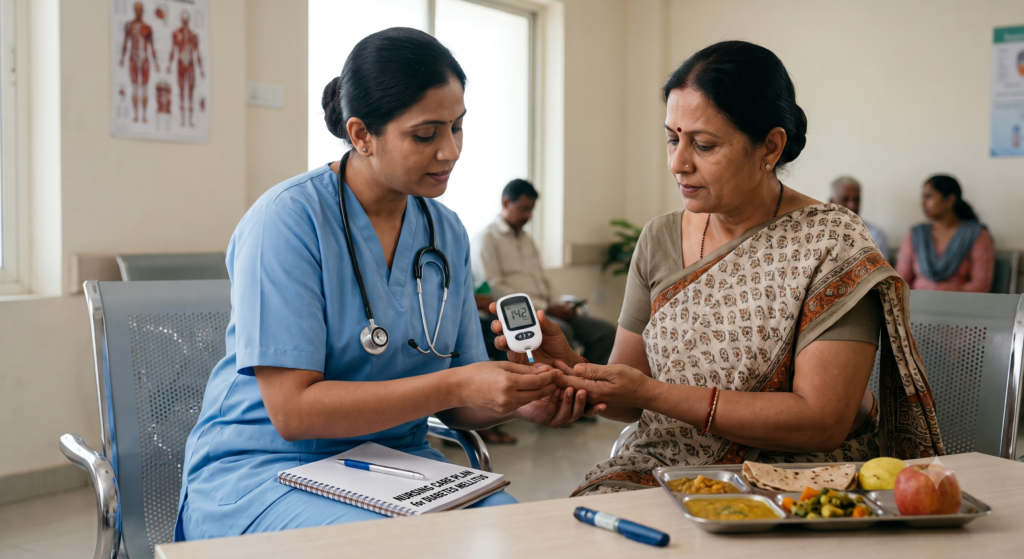
- Educate the patient on carbohydrate counting, medication timing, and the importance of consistent meal timing.
- Assess feet and skin integrity daily, since diabetic patients are at higher risk for poor wound healing and infection.
- Encourage regular physical activity as appropriate, which helps improve insulin sensitivity.
- Reinforce follow-up care, including HbA1c monitoring and routine ophthalmology and podiatry checks.
Why This Matters for NCLEX-RN
Diabetes-related questions on the NCLEX-RN often test your ability to prioritize interventions using clinical judgment — for example, recognizing that treating hypoglycemia takes priority over routine diabetes education. Practicing full care plans like this one builds the same clinical reasoning tested in Next Generation NCLEX (NGN) case studies. For a complete study plan, see our NCLEX-RN Preparation India guide.
This care plan is part of our Nursing Care Plans hub — explore more condition-based care plans and NCLEX-RN prep resources from BelieveNursing.
Want Personalized NCLEX-RN Coaching?
BelieveNursing by NCA Academy helps Indian nursing graduates master care plans and clinical judgment questions through live classes, weekly mock exams, and one-on-one mentorship. Book a free counselling session to get started.
Related Nursing Diagnoses to Consider
Depending on the full clinical picture, a patient with diabetes mellitus may also present with related nursing diagnoses that should be assessed and documented:
- Risk for Infection related to elevated blood glucose levels impairing immune response
- Imbalanced Nutrition: More Than Body Requirements related to excessive caloric intake relative to metabolic needs
- Deficient Knowledge related to unfamiliarity with disease process, diet, and medication regimen
- Risk for Impaired Skin Integrity related to poor peripheral circulation and delayed wound healing
Patient Education Priorities
Patient teaching is a core nursing responsibility for diabetes management and a frequent focus of NCLEX-RN questions. Key education points include recognizing early signs of hypoglycemia (shakiness, sweating, confusion) and hyperglycemia (excessive thirst, frequent urination, fatigue), correct glucometer and insulin technique, the importance of consistent carbohydrate intake at meals, and when to contact a healthcare provider. Nurses should also assess health literacy and cultural or dietary factors — for Indian patients, this often means discussing how to adapt traditional diets (rice, roti, sweets) rather than assuming a Western meal plan.
Full Nursing Care Plan for Diabetes Mellitus: Summary
Use this nursing care plan for diabetes mellitus as a template for building your own care plans in clinical rotations — the same nursing diagnosis, data, outcomes, and interventions structure applies whether you’re studying for exams or charting for a real patient. For more background on the condition itself, see the American Diabetes Association’s overview of diabetes.